Lifting weights and “bulky” vs. women’s health
There’s a pernicious bit of misinformation in women’s fitness content that lifting weights will make you look bulky. I would even argue that it is disinformation. The notion falls apart under even gentle criticism, but it persists. Worse still, it’s often repeated by women to other women. Let’s try to counter this dangerous misinformation with some actual truths.
“Bulky” doesn’t mean what you think it means
Seriously, what does it mean? I’ve seen thin and slender female fitness content creators accused of being bulky. Like pilates princess looking influencers who are lean and agile. Do they have somewhat defined biceps? Sure. Is that bulky? Does that mean every woman who is fit and even mildly athletic is bulky?
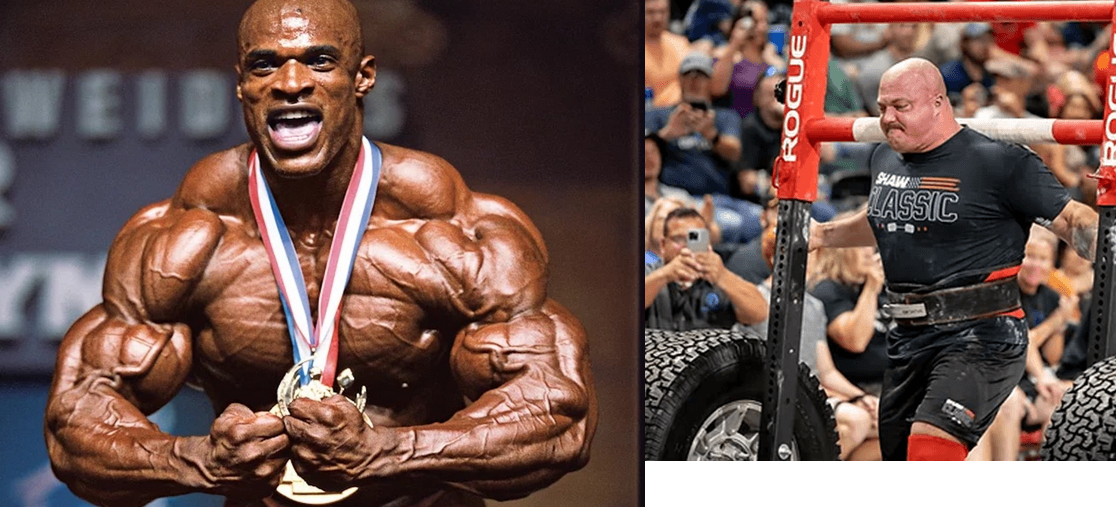
When I think of bulky, I think of huge body builders and strongman athletes. Ronnie Coleman, Mitchell Hooper, that sort of thing. Look at those gentlemen and tell me they’re not bulky. I don’t think of Timothée Chalamet or Robert Pattinson.
Let’s not forget, the men who look bulky worked hard for it. It took years of dedicated work, heavy weights, and massive amounts of protein. And most of the truly bulky people you see are not, shall we say, natural. That leads to my guess that when women say they don’t want to look bulky, they’re thinking of enhanced female body builders. What they’re not realizing is that women who take anabolic steroids still have to work hard for years to gain enough muscle to be truly bulky.
To give an example of women who are definitely not bulky but are very strong, think of yoga instructors. They’re fit, they tend to be fairly lean, strong enough to do some truly impressive moves. Are they bulky? What about people who do pilates? They’re strong and agile, but are they bulky?
And last, consider this: there are men who have been trying to get bulky for years. There are men who take anabolic steroids who can’t get bulky. Getting that big, doesn’t just take hard work, protein, and drugs. It takes genetics too.
You can’t get bulky by accident
Here’s some of what you need to do to get bulky:
Nutrition come first. You’ll need to eat at least 0.7 grams of protein per pound of body weight every single day, and eating as much as 1.25 grams per pound is likely in your best interests. Since you’ll be having so much protein, you’ll also need to worry about getting enough variety in your diet to cover your vitamin and mineral needs. You also have fiber to consider, which means whole grains, vegetables, and other fiber sources. Then, you’ll need to track your calories to ensure that you’re eating enough food to build that muscle, but not so many that you gain excessive fat while building muscle.
Progressive overload. You’ll also need to get really good at increasing the intensity of your exercises. That means that if you start biceps curls with ten repetitions with 5 lb weights, you’ll need to increase either the reps or the weight over time. And, by over time, I mean striving to do so every week for years. It’s feasible that you could be doing fifteen reps with 30 lb weights in a couple years. You’ll also be doing these muscle building workouts multiple days a week for that entire time
Reduce stress. Even though cortisol’s effects are somewhat overblown, it is a catabolic hormone that increases with stress. It can and does interfere with physique goals, and so it should be avoided. That means you might have to fix your sleep schedule, quit your awful job, use less or even no social media, and more. If you’re looking to maximize your muscle growth, this isn’t negotiable.
Supplementation and “supplementation.” Creatine is a no-brainer, but there’s a lot of other dubiously effective supplements to consider, like pre-workout and turkesterone. And with all that taken care of, you then might come to the conclusion that “supplementation” is required to get to the truly bulky physique.
There are guys in the gym who have made it through this entire list all the way down to special “supplementation” who are still not bulky. Keeping all that in mind, how likely does getting bulky by lifting slightly heavier weights sound?
“Bulky” is a sexist dogwhistle
Back in the days not that long ago when women were considered to be property, their value was in their appearance, or so their owners told them. Has that changed? In theory, women aren’t property anymore. They can get jobs, have bank accounts, vote, and other fun things. Yet women are still told to be meek, be pretty, and not speak over men. They’re told to be quiet, are ignored, and have to fight much harder than men to be taken seriously. They’re expected to be weak, gentle, and not get bulky.
And that is bullshit.
The people who benefit the most from small, weak women are those who seek to control them. That’s not all men, but it’s more enough to be bad new. With the rise of so-called “traditional” values, women’s rights are being threatened. Rights we all thought were guaranteed are being repealed. No one gets more value out of this “bulky” myth than men who want to be able to own women again.
So I say, abandon this ludicrous notion.
There are a lot of reasons to get stronger and more muscular, but if spite motivates you, then let it flow through you. Become strong. Get big. Throw off the yoke of these oppressive losers.
And, yes, women repeat the bulky myth a lot. That’s not because it’s good advice, it’s something called internalized sexism. Tricking people into believing a lie is step one; step two is getting them to trick others. Please, do not fall for this nonsense.
Osteoporosis sucks, and guess who’s more likely to have it
Women are far more likely than men to suffer from osteoporosis. The condition is multi-factorial, but among the major risk factors are low muscle mass, perimenopause, and menopause. It ain’t men who get those second two. Though the menopausal periods in a woman’s life are non-negotiable, muscle mass is. If you want a better future, one where your bones don’t crumble, muscle is your friend.
One of the things that helps build bones is physical stress. What’s an easy way to apply stress to your bones? Lift and carry heavy things. If it feels heavy to you and you can only lift so much then it’s heavy enough. As you apply stress to your bones, they get the message to build up rather than break down.
For an older person, a broken hip or knee can be catastrophic to one’s quality of life which can lead to a downward spiral. Fragility of the elderly can be frightening to see and to live. Yet there are plenty of old folks who are mobile and independent well into their nineties and beyond. The difference can be as simple as staying active, and, indeed, lifting heavy things.
If you don’t want to be fragile and maintain independence in your old age while also stacking the deck against osteoporosis, you want muscle and strength. You don’t need a lot of either to do yourself a world of favors in the long run. This is especially critical for women who are at greater risk, and one of the reasons why the “bulky” myth is so damaging.
Muscle helps more than just bones
Another health reason for more muscle mass? Prevention of diseases like diabetes, cardiovascular diseases, dementia, and cancers. Yes, cancers. Muscle mass is a risk reduction for getting a cancer in the first place. It’s also an good indicator of your survival of and recovery from cancers.
This affects all humans. Being more active and having more muscle directly correlates with better health outcomes. Men get better outcomes, so do women, as well as anyone to whom those two terms do not neatly fit as well. The people with these better health outcomes do not need to be “bulky.” Even just a few pounds more muscle is enough to make a difference.
There’s also a growing body of research that links muscle mass to cognitive function. That’s right, there’s scientific evidence that links being strong with being smarter. That link also goes the other way too, linking cognitive decline with sarcopenia, the muscle mass loss that comes with age.
Strength training and muscle building do so much more than just change your physique.
Fearing “bulky” is for the weak (literally)
Bulky may be hard to define, but it’s definitely not going to happen if you lift some slightly heavier weights. The people who do try to deride women for being “bulky” have some suspect reasons. They’re also wrong, sexist, or both. And pushing women to avoid muscle at all costs has health implications, both in youth and in older age.
And, just to nail this coffin shut, if you’ve become bulky and don’t like it, you can get smaller easily. Just stop lifting heavy for a while! Muscle is hard to grow, relatively easy to maintain, and quite easy to lose if you want. You can also get that muscle back much more easily than building it the first time due to muscle memory (the fitness kind). The excuses are very thin on the ground.
All that said, if you don’t want to look bulky, you certainly don’t have to. That doesn’t mean you have to be weak. Training for maximal strength will get you strong and build far less muscle. Training for muscular endurance can give you cardio and some strength gains while avoiding too much muscle. You have loads of options.
The only option to avoid is to not exercise because of a fear someone else’s lies. You deserve better.