Nutrition 101
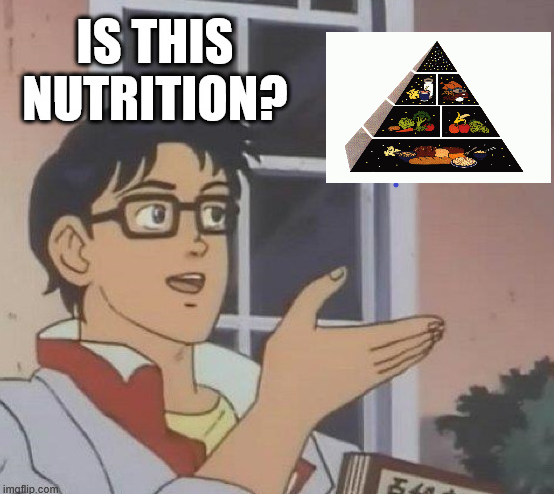
Nutrition is not as hard as the Internet makes it out to be. Even with all the pyramids, influencers selling you meal kits, and superfoods, it’s actually fairly simple. In fact, I’m willing to bet you can get the gist in the following single sentence:
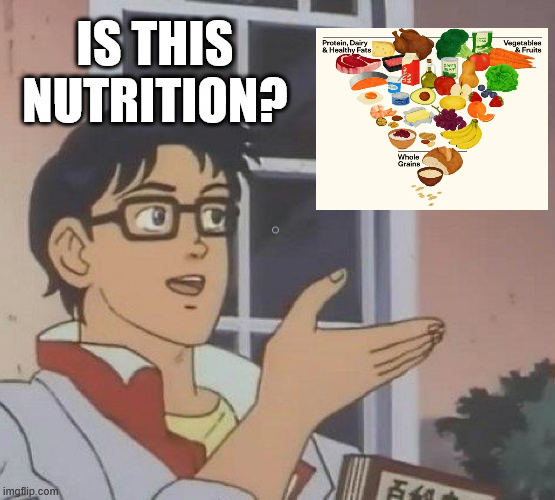
Eat mostly fruits and vegetables, some grains, protein and dairy, while limiting desserts and junk.
If you understand that, then congratulations, you’ve completed Nutrition 101.
Nutrition 101+
OK, so that was too easy for you. let’s dig a little deeper into the weeds.
Eat mostly fruits and vegetables
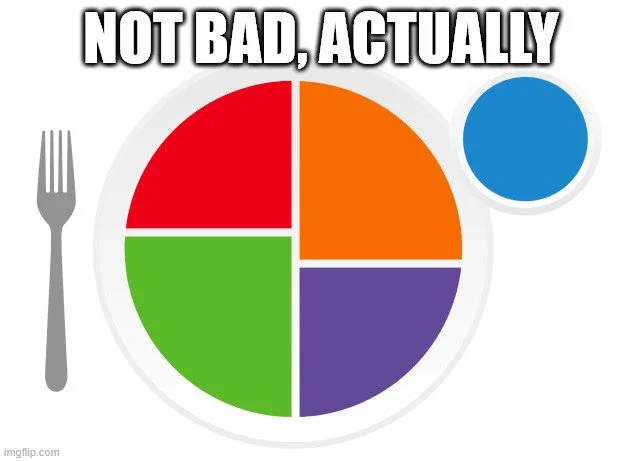
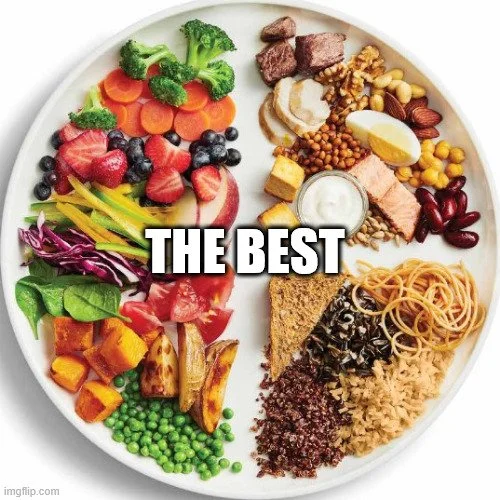
For a balanced meal, your plate will want to be like 50% fruits and/or vegetables. For the 101 level, pick fruits or vegetables that you like. Kale may be a “superfood,” but if you hate kale, you won’t eat it. Carrots may be “high-sugar,” but if you like carrots, eat them. Also, a candy bar is what I would call high-sugar. Would you compare the sugar in a candy bar to a carrot? No? Good.
An example serving could be a lettuce, carrot, and cucumber salad served along with the rest of your meal.
Eat some grains, whole is preferred
In your balanced veggie/fruit forward meal, a grain is a good choice and should be about a quarter of your plate. You aren’t hurting for options: rice, quinoa, barley, oats, bulgur, farro, millet, popcorn, wheat. This comes in lots of varieties of ways to eat your grains too. Bread is a good option, a side of rice with your meal, barley mixed into your soups, pastas of many sizes and shapes.
Whole grains are preferred because of their increased fiber and other micronutrients. However, you don’t have to give up all refined grains. White rice may not be quite as nutritionally dense as brown, if you prefer the taste and get your whole grains in elsewhere, eat white rice.
An example serving could be two slices of whole wheat bread for your sandwich.
Eat protein
Another quarter of your plate should be a protein. You have your standard animal based sources like meats, eggs, and dairy. Plant based proteins, like tofu, beans, and lentils are also fantastic protein sources. There’s a lot more nuance here, but so long as you’re getting in protein in most meals, you’re doing great.
An example could be a chicken breast for a meat eater, or pan fried tofu for a vegetarian.
Limit desserts and junk
This is the hard one. Desserts may be tasty, but they offer the most calories for the least nutritional value. Junk food does tend to include ultra processed foods, but it isn’t limited to that. Pretty much, if it’s not one of the big three of fruits/vegetables, grains, or protein, it’s likely to be junk food. This includes alcohol, which is sad for many.
However, don’t think you can’t ever have fun food again. If you can have a small serving of chips rather than an entire family sized bag, it’s not the end of the world. Just eat your junk food mindfully and in limited amounts and it will be fine.
Congratulations
If you read all that, you understand the basics of nutrition. You can go deeper into the topic, and it gets deep. However, if you can follow the simple guidelines above, then you’re doing just fine. You don’t need to know more than that to live a healthy life. If you’re looking for deeper information, check out Fitness 102!